Zwischenräume / Interstices
Curator:
Shao-Lan Hertel
Museum für Ostasiatische Kunst, Cologne - Germany
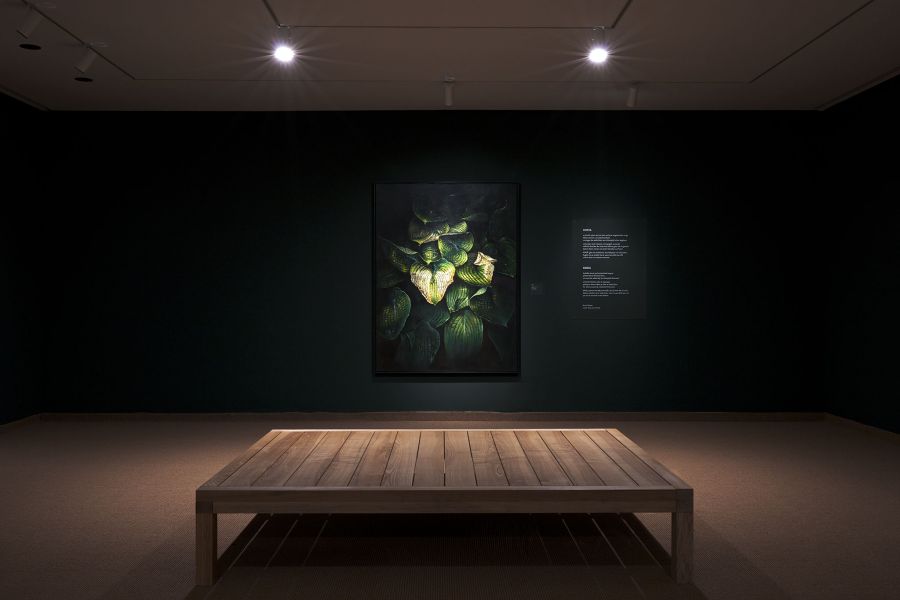
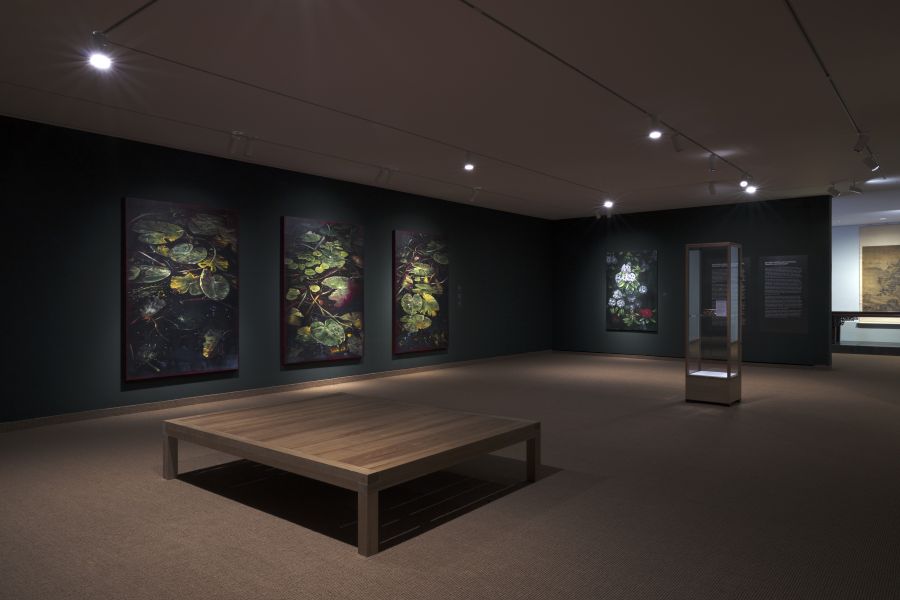
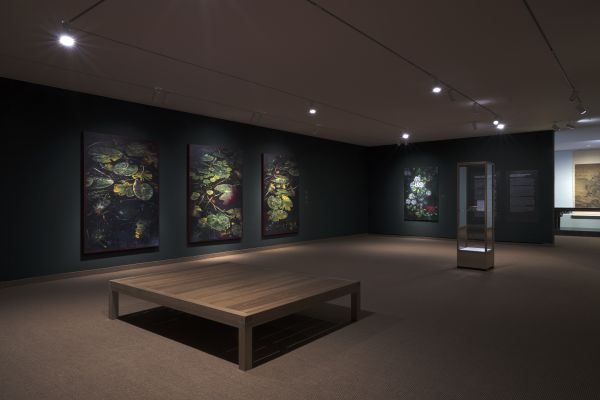
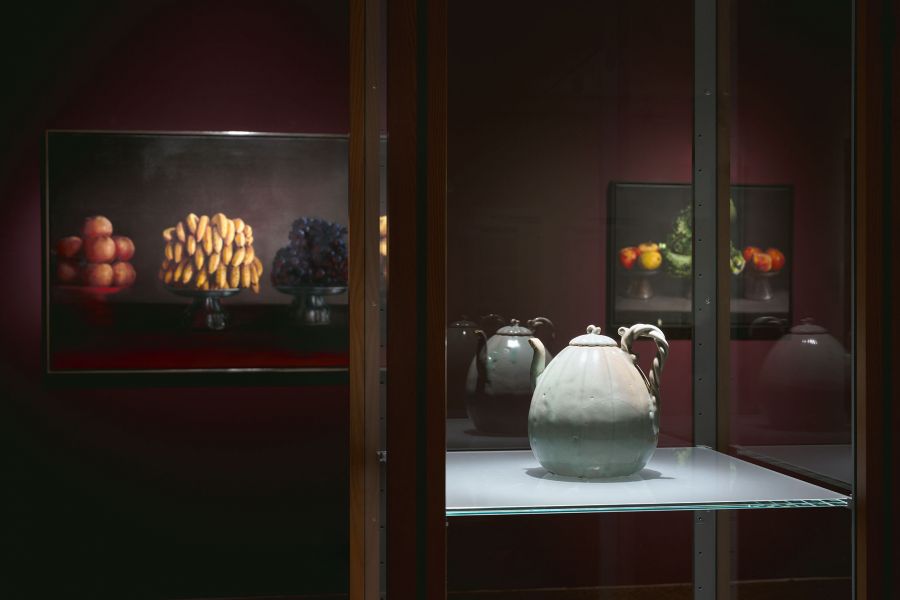
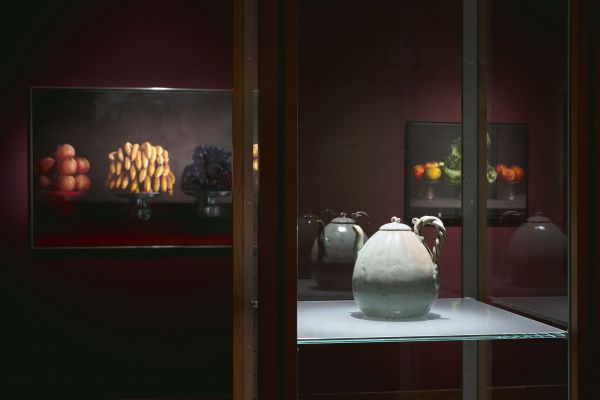
The Museum for East Asian Art Cologne is delighted to show contemporary works by Helena Parada Kim. The Cologne-born artist of Korean-Spanish origins studied at the Kunstakademie Düsseldorf as master student under British painter Peter Doig. While the pronounced naturalism in Parada Kim's paintings is clearly indebted to traditions of the European Old Masters, her pictorial motifs draw from diverse image traditions and visual and material cultures specific to East Asia, in particular Korea. Through select exhibits, the special presentation highlights relevant subject areas in three exhibition rooms accordingly: plants and nature depictions; traditional costumes and textiles; rituals and cultures of dining.
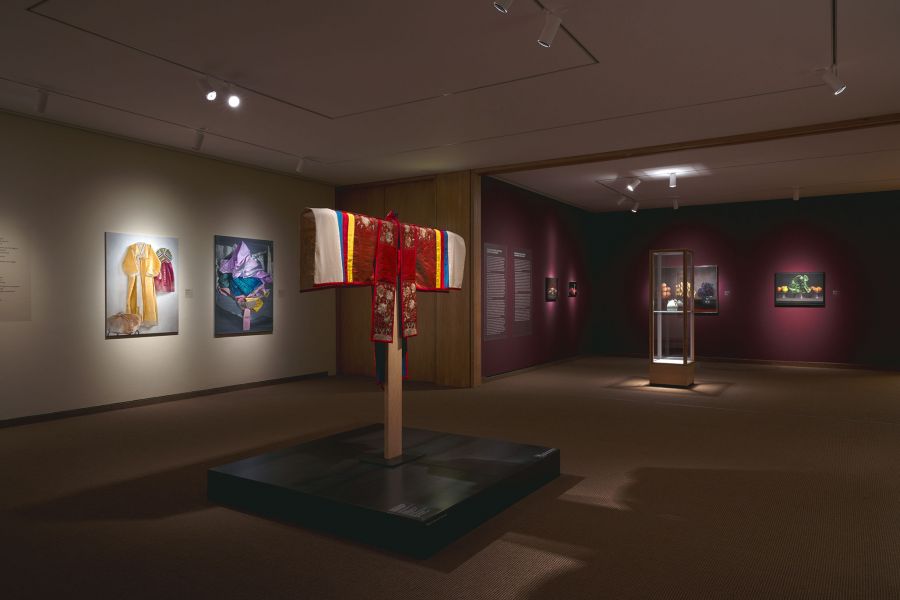
Parada Kim's oeuvre references classical East Asian picture formats such as hanging scrolls and folding screens, and likewise expands these. Her particular artistic dealing with forms and functions of the traditional Korean hanbok, for example, focuses clothing and robes as meaningful image carriers themselves. At the heart of the special presentation lies a commissioned painting created after a Joseon-period wedding garment (hwarot) now in the museum collection, which she realized specially for the exhibition. In addition, poetic “interstitial texts” on individual exhibits by the Berlin poet Anna Hetzer intermittently enrich the exhibition.
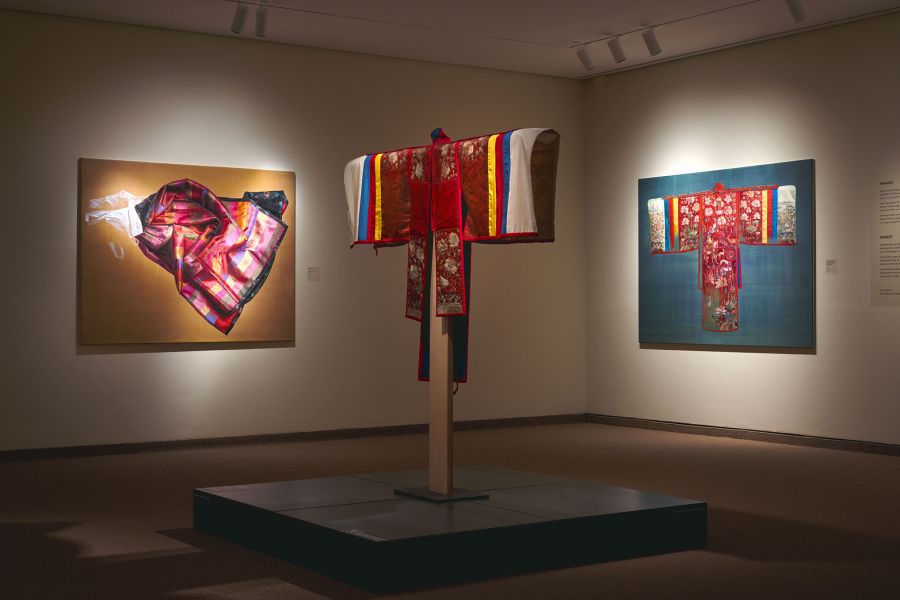
With its title “Interstices,” the special presentation positions Parada Kim as a relevant representative of a younger generation of artists operating, significantly, “between cultures” – between different, culture-specific pictorial traditions, art terms, technical approaches, stylistic influences. The exhibits testify to a personal inquiry into the familial connections to Korean culture and the past, reflecting questions and phenomena of the cultural and artistic negotiation of subjective and collective identity: the relationship between art and nature; human being and living environment; role models and social ideals; homeliness and alterity. Its eponymous “Interstices” thus seek to open up the museum exhibition across cultures and categories, as a Third Space and Third Place for dialogue and exchange – for seeing and thinking, for contemplating and questioning – in critical and creative way.